What We Built

Lilliewatch: multi-sensor monitoring across the Niger Delta.

An operational dashboard built for response, not advocacy. Coverage spans the regional Niger Delta view, six major pipeline corridors, and four export terminal clusters, each with its own calibrated baseline and near-real-time alert layer.

11 Nigerian AOIs

Niger Delta regional overview, six pipeline corridors (TNP, NCTL, Trans Forcados, Trans Escravos, Trans Ramos, Qua Iboe), and four export terminal clusters.

4-Sensor Fusion

Sentinel-1 SAR, VIIRS thermal, TROPOMI SO₂, and Sentinel-2 NDVI combined through a calibrated ML classifier for high-confidence detection.

6-Hour Refresh

Near-real-time alert pipeline runs every six hours on high-priority corridors. Cached historical baselines support rapid anomaly detection.

Validated Methodology

Independent technical review by collaborating satellite analytics firms. US validation deployments across Indiana, Louisiana, and the BP Whiting Refinery demonstrate methodology portability.

How It Works

Four sensors. One operational picture.

No single satellite sensor produces reliable crude oil theft alerts on its own. Each has gaps the others fill: clouds defeat optical imagery, thermal detects only active heat, SO₂ requires UV penetration. The trustworthy signal is where multiple sensors agree.

Sentinel-1 SAR
Cloud-penetrating radar
Detects oil slicks on water, surface change along pipeline corridors, and new excavation pits, even through tropical cloud cover.
VIIRS / FIRMS
Day-night thermal
Identifies active fires from artisanal refining and pipeline burning at 375m resolution, twice daily across the full region.
TROPOMI SO₂
Atmospheric chemistry
Captures sulfur dioxide plumes from crude burning, layered onto thermal hotspots for dual-signature confirmation.
Sentinel-2 MSI
Vegetation health
NDVI and NDWI track mangrove die-off, contamination spread, and the visual aftermath of oil spills along the creek network.
Live Product

What it actually looks like.

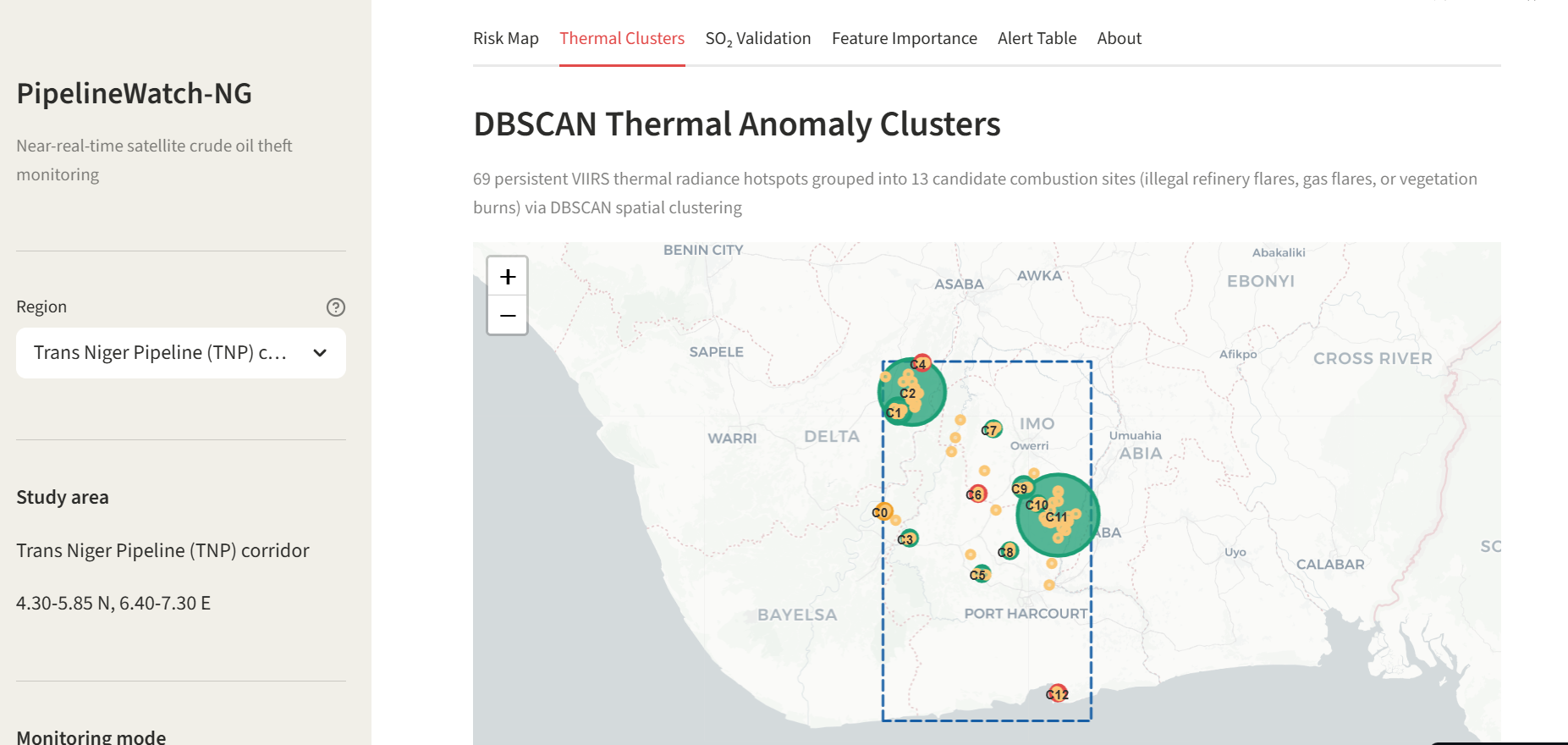
Two views from this week's production runs. The regional dashboard shows multi-sensor metrics at scale. The corridor drilldown shows the same methodology applied to a single pipeline, locating specific candidate combustion sites.

Lilliewatch dashboard showing the Niger Delta regional view with multi-sensor metrics including 6 co-located thermal and SO2 sites

Regional view

Niger Delta, May 2026. The "Co-located sites: 6" tile is the multi-sensor convergence: six locations this week where VIIRS thermal hotspots and TROPOMI SO₂ plumes co-located. The high-confidence subset within a 1,300+ hotspot baseline.

Lilliewatch Trans Niger Pipeline corridor showing 13 DBSCAN-clustered candidate combustion sites labeled C0 through C12

Corridor drilldown

Trans Niger Pipeline corridor. 69 persistent thermal radiance hotspots grouped into 13 candidate combustion sites via DBSCAN spatial clustering. Each labeled site is a specific lat/lon a patrol could be dispatched to.

Operational Capability

Per-site Site Watch. Ground truth before raids. Re-emergence detection after.

The regional dashboard tells you where to look. Site Watch tells you whether what you are looking at is real, and whether it is still there.

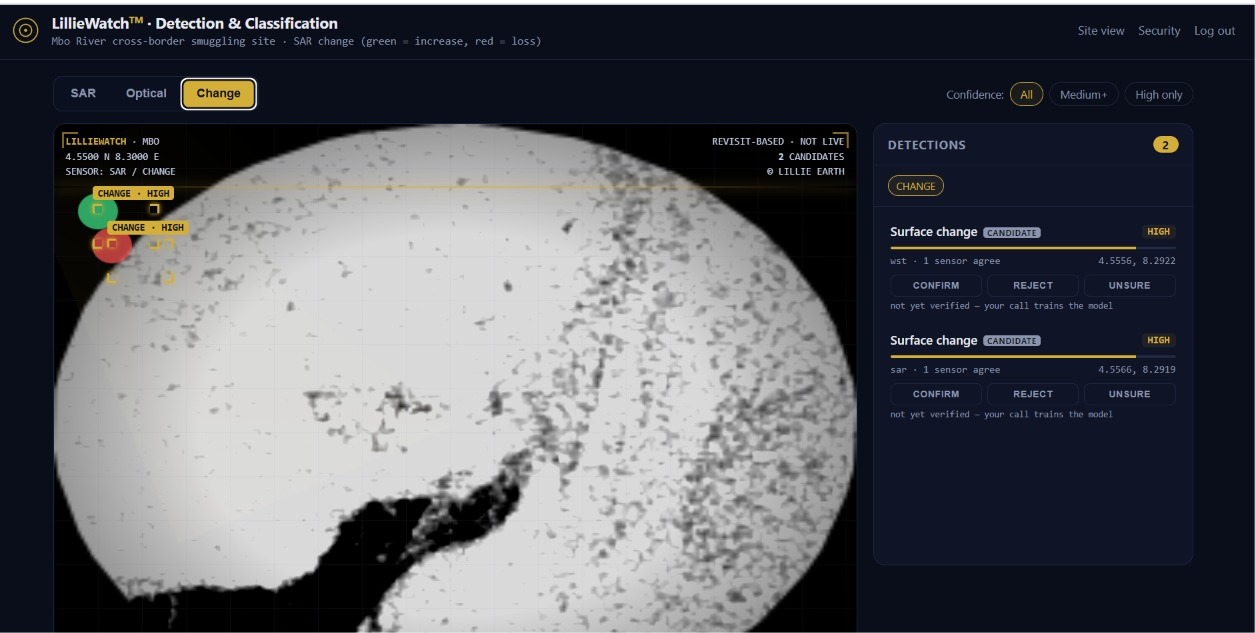
Pick a watched location, then watch six weeks of weekly imagery across all four sensors in the same view. Pre-raid: agreement across thermal, SAR, SO2 and NDVI is the signature of a working bunker. Raid week: a coordinated collapse confirms the strike worked. Post-raid: continued silence confirms the site is dismantled; renewed activity on any single sensor flags possible re-emergence and re-tasks the field team.

Bunkers are routinely rebuilt within two to six weeks of a strike. Without a multi-week, multi-sensor view, that pattern is invisible. Site Watch makes it routine.

Example shown: Allison Community / Bonny C12, raided 22 March 2026 by the Nigerian Navy. Six weeks of weekly aggregates around the strike. Verdict on the live dashboard: site is quiet.
Sentinel-1 SAR
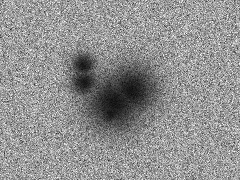
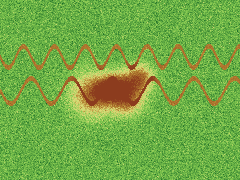
Sentinel-1 SAR clip showing dark oil slick polygons one week before the raid
W−1
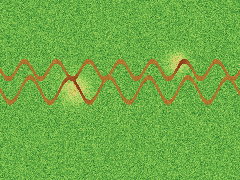
Sentinel-1 SAR clip showing clean speckled water during raid week
W+0 raid
Dark oil slicks suppress radar return on water. They disappear when discharge stops.
VIIRS thermal
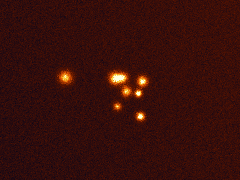
VIIRS thermal clip showing bright fire pixel clusters one week before the raid
W−1
VIIRS thermal clip showing a dark cool field during raid week
W+0 raid
Hotspot clusters mark active combustion. They go dark when the bunker stops burning.
Sentinel-2 NDVI
Sentinel-2 NDVI clip showing a brown refinery scar in the vegetation canopy
W−1
Sentinel-2 NDVI clip showing the scar persisting one week after the raid
W+1
Vegetation scarring persists for weeks after a raid. A trend back toward green is recovery.
TROPOMI SO₂
TROPOMI sulphur dioxide plume centred on the site one week before the raid
W−1
TROPOMI sulphur dioxide field with no plume during raid week
W+0 raid
Sulphur plumes confirm crude oil burning. The plume vanishes when combustion stops.
Live Activity

Real data from the operational cron.

This chart pulls directly from the latest near-real-time output that our GitHub Actions cron has written. No staging, no demo data. What you see here is what an operator on our system would see right now.

Niger Delta region · daily activity
Loading latest data...
LOW alert day MEDIUM alert day HIGH alert day SO₂ max column (DU)

See it running with current data.

The live dashboard is the same system described above, running on real cron output. Switch between AOIs in the region dropdown.